
Creating fire training equipment is not a simple fabrication job. It requires an understanding of how firefighters, HAZMAT teams, ARFF crews, and other emergency responders work under pressure. The goal is to build tools and structures that help them train safely while exposing them to realistic conditions. At Fireblast Global, we approach every project with that responsibility in mind. It takes careful planning, strong engineering, and materials that can stand up to harsh environments to create equipment that supports real skill development.
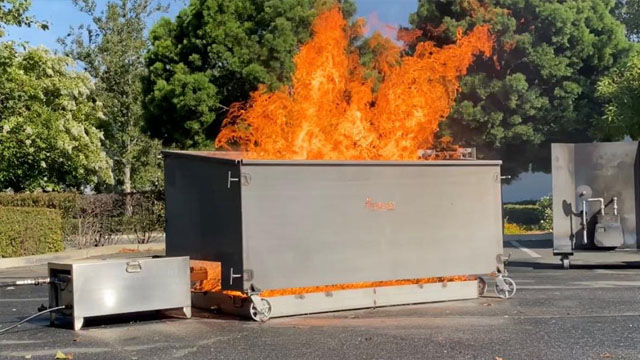
Safety Begins in the Design Room
Before any steel is cut, safety takes center stage. Training tools have to simulate high heat, smoke, confined movement, and challenging scenarios without creating unnecessary risk. This means selecting metals that can handle repeated temperature swings, designing components that behave predictably, and engineering gas, flame, or smoke systems that are fully controlled.
Redundant safety systems, fail safe mechanisms, and precise fabrication all play a role in making sure the equipment performs the same way every time. If instructors can trust that a burn prop will ignite, ventilate, and cool in a consistent way, they can focus their attention on coaching trainees rather than managing equipment behavior.
Built to Survive Heavy Use
Fire service training is unforgiving. Props and structures are exposed to extreme heat, cold water, tools, impacts, and sudden cooling. They also get used repeatedly, often several times a day. That kind of treatment demands strength at every connection point.
Durability is shaped by choices like:
- Structural steel that resists warping
- Welding that holds up to thousands of heating and cooling cycles
- Finishes that protect against corrosion and weather
- Replaceable pieces in areas that take the most wear
Modern CNC and laser equipment helps us fabricate panels, frames, and components with exact tolerances. This precision is what keeps a structure from loosening, shifting, or weakening over time. For emergency responders, confidence in their training environment is crucial, and long-term durability supports that trust.
Why Modularity Makes a Difference
Training needs change from year to year. Fire departments add new scenarios, update lesson plans, and respond to revised NFPA standards. A modular training design lets them adapt without replacing an entire structure.
Modularity might include:
- Walls and floors that can be reconfigured
- Add on rooms for expanded scenarios
- Adjustable ventilation paths
- Burn zones that can be relocated
- Aircraft components that mimic different models
This flexibility allows instructors to keep training dynamic. Trainees stay engaged, and departments get more value from their investment. It also allows facilities to grow over time as budgets and training requirements shift.
Maintenance Should Be Simple
Even the best built training prop needs regular care. Soot, residue, and thermal fatigue are part of the job, but equipment should be designed in a way that makes upkeep manageable.
Good maintenance-oriented design usually means:
- Panels that open without special tools
- Easy access to burners, sensors, and plumbing
- Clear labeling for mechanical and electrical systems
- Components that can be swapped out quickly
- Surfaces that stand up to repeated cleaning
When equipment is easy to maintain, it stays in service longer and reduces downtime. That reliability matters when agencies are trying to keep crews prepared throughout the year.
Realistic Conditions Create Better Responders
The most effective training environments feel close to the real thing while still being controlled and safe. Engineers pay close attention to layout, heat flow, smoke production, and physical obstacles to recreate the kinds of challenges responders meet on live calls.
Realism may come from:
- Fire behavior that matches different fuel sources
- Heat zones that reflect real interior temperatures
- Smoke that mimics poor visibility
- Usable doors, windows, and stairways
- Accurate aircraft or industrial layouts
- Props that encourage natural movement and communication
These elements help firefighters and emergency teams build muscle memory. When they practice in a space that feels familiar to actual incidents, their confidence and decision making improve.
Engineering With Real Purpose
Every detail in a Fireblast training system has a reason behind it. We study how responders move, how teams communicate, and how real emergencies unfold. That insight guides decisions in the design phase long before fabrication begins.
Whether we are building a structural burn building, an ARFF aircraft trainer, a mobile fire prop, or a custom HAZMAT simulator, the goal is the same. Create equipment that is strong, predictable, adaptable, and realistic. Most importantly, create equipment that helps responders do their jobs safely and effectively. Contact Fireblast Global at 951-277-8319 or visit us online for more information today about our custom metal fabrication abilities.